Guide for healthcare providers
Treating childhood obesity across different ages
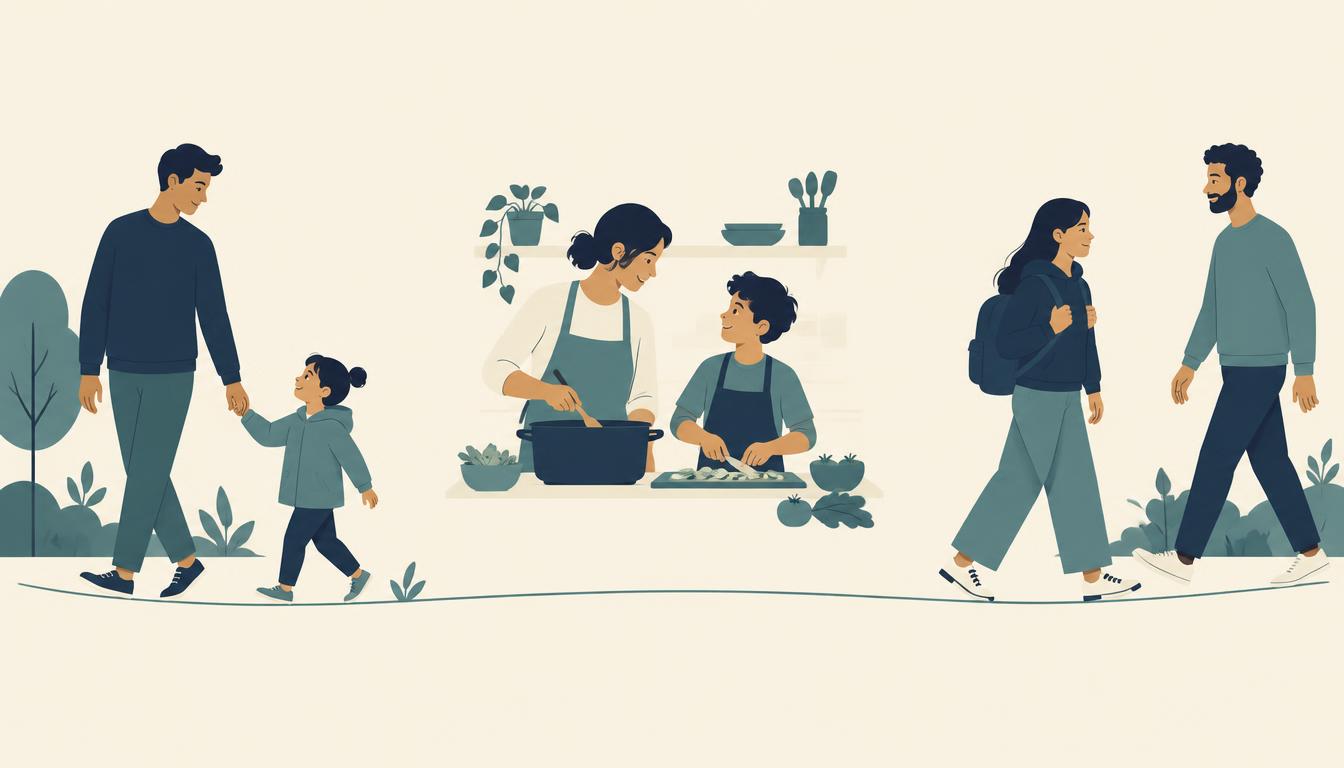
Evira helps clinics monitor a child’s progress and support the family between visits. How the tool is used must adapt to the child’s age, developmental stage, and daily life. For younger children, communication is primarily directed to guardians. As children grow, their own perspectives and questions take centre stage. For adolescents, having agency in their care and receiving support in situations where they make independent decisions becomes essential.
Reviewed by Evira's medical team
Published · Updated
A shared clinical foundation for family and clinician
With Evira, the child weighs themselves at home on a numberless scale. The family views progress relative to their treatment goal in the app, while healthcare professionals have access to more detailed clinical data. The messaging feature enables families to ask questions and receive feedback between clinic appointments. How Evira works in healthcare.
This provides families and clinicians with an objective starting point for consultations. How have things worked since the last visit? What changes has the family made, and what does the trend show? The clinician can follow up on developments at home and collaborate with the family on next steps.
For younger children, support is mediated through guardians
Younger children rely on adults to implement treatment in their daily routines. Guardians therefore need to track progress, ask questions, and receive guidance when challenges arise at home. In Evira, they can access feedback and stay in touch with the clinic while working on agreed lifestyle changes.
For example, contact may address a new routine that works during the week but falls apart at the weekend. The clinician can help guardians problem-solve what might work better in their household. When progress is positive, the same channel allows clinicians to reinforce successes and encourage persistence.
At onboarding, the clinic reviews who assists the child with weighing and who reads and replies to messages. If the child lives across two households, routines must be manageable in both. Evira allows multiple family accounts to be linked to a single child, ensuring all participating adults can stay involved.
For school-age children, personal participation increases
School-age children have independent experiences that guardians do not always observe: school lunches, break times, extracurricular activities, and time with peers. These experiences must have a place in treatment. Children should understand their goal and be able to express what feels manageable or difficult, using age-appropriate information. 1177 for healthcare professionals on communication and child participation.
The Evira progress curve can serve as a visual aid when the clinician, child, and guardians discuss how things are going. The clinician can explain what the trend shows and ask how the child experiences changes at home. This helps the family connect what they see in the app with their daily actions.
Guardians continue to play a vital role in shaping the home environment and communicating with the clinic. The child’s participation grows as they ask questions, propose ideas, and help select next steps they feel capable of achieving.
Adolescents need agency in their clinical care
For an adolescent, school demands, peer relationships, activities, and increasing independence directly influence how treatment works. Consultations must therefore be grounded in the young person’s own experiences and goals. This might involve situations where they make independent food choices, manage their daily schedule, or decide what kind of support feels helpful.
Evira allows adolescents to maintain contact with the clinic when questions arise between appointments. Together with the young person and their guardians, the clinician can agree on how messaging will be used and what support is needed at home. A brief check-in via the app can be followed by a phone call or clinic appointment when a topic requires deeper discussion.
Adapting follow-up as the child grows
An approach that works at the start of treatment may need adjusting as the child grows older, transitions to a new school, or develops new routines. Use follow-up appointments to review how weighing and communication are working. Who is currently using the app? Does the child have new questions? Do guardians or the adolescent need a different type of support?
Evira provides continuous clinical data for these discussions. If measurements stop or trends shift, the clinician can reach out to explore what has happened. It may be a practical obstacle, a change in family circumstances, or a need to reconsider the treatment plan. Ask also how the child and family experience the support, ensuring follow-up evaluates both clinical progress and how treatment fits their lives.
What the research shows across paediatric age groups
Evira’s one-year study included 107 children and adolescents aged 4.1–17.4 years receiving digitally supported treatment. They were compared with 321 age- and sex-matched registry controls receiving standard care. After one year, the mean change in BMI z-score was −0.30 with Evira-supported treatment and −0.15 with standard care.
In age-stratified analyses, both children under 12 years and adolescents aged 12 and older achieved significantly better outcomes with digital support than corresponding groups in standard care. The study was a pragmatic comparison without randomised treatment allocation, evaluating the overall treatment package. The findings support use across both the child and adolescent age groups studied; individual treatment plans remain the responsibility of the healthcare provider. Hagman et al. 2022.
Explore how Evira can be used across your patient population
During a demonstration, we can show how the family app and the clinical portal interact. We encourage grounding the walkthrough in scenarios typical of your clinic: younger children where guardians manage contact, school-age children taking an active role, and adolescents seeking greater independence in their care.
Frequently asked questions about Evira across different ages
- What age groups have been studied with Evira?
Evira’s one-year study included patients aged 4.1–17.4 years. Analyses demonstrated superior outcomes with Evira-supported care compared with standard care in both children under 12 years and adolescents aged 12 and older. The study compared clinical treatment with digital support against matched registry controls.
- How is Evira used with younger children?
Guardians assist the child with weighing, monitor progress in the app, and maintain contact with the clinic. Clinicians provide guidance and support as the family implements lifestyle changes at home.
- How can adolescents participate in treatment?
Adolescents can participate in formulating goals, tracking progress, and deciding how communication with the clinic should operate. Clinicians discuss parental involvement with the family, agreeing on who reads messages and which matters are best discussed in one-to-one consultations.
- Which treatment yields the best outcomes across all ages?
Treatment choices must be based on the child's clinical needs and the family's individual circumstances. Evira's published study demonstrates superior mean outcomes compared with standard care across the evaluated age cohorts. It does not prescribe the optimal intervention for every individual patient. The healthcare provider determines how Evira is integrated into care and what complementary interventions are required.
More guides for healthcare providers
- What a paediatric clinic can achieve with EviraSupport when changes need to work at home, published treatment outcomes after three years, and contact targeted to patients who need it.
- How to choose treatment tools for childhood obesityStart from what the team and families need to be able to do in treatment, then assess tools, research, and how the work fits into clinic routines.