

Childhood obesity – a significant challenge
Obesity, defined as an iso-BMI above 30, is a complex and chronic disease. A child with obesity has an increased risk of developing comorbidities both during childhood and long-term.
Obesity, defined as an iso-BMI above 30, is a complex and chronic disease. A child with obesity has an increased risk of developing comorbidities both during childhood and long-term. Even children who are overweight and have an iso-BMI between 25 and 30 have an increased risk of developing diseases in the future (1). According to the Health and Medical Services Act and the National Board of Health and Welfare's regulations, all children in Sweden have the same right to receive treatment for the disease of obesity.
Prevalence and risks
Prevalence
There are approximately 160 million children and adolescents with obesity in the world today (aged 5-19). This number is expected to increase to just over 250 million by 2030. Childhood obesity is common in Sweden today. Documentation is incomplete, but existing data indicates that between 4-10% of children in Sweden suffer from obesity (2,3).
Obesity in childhood and premature death
Childhood obesity leads to a reduced life expectancy (4,5,6,7). Obesity leads to a reduced life expectancy at all ages, but the effect is more pronounced if obesity develops in young years (8). Excess mortality in Sweden is three times higher before the age of 30 for children with obesity (9) and thus higher than for type 1 diabetes. Research shows that virtually all organ systems in the body are affected by childhood obesity (10).
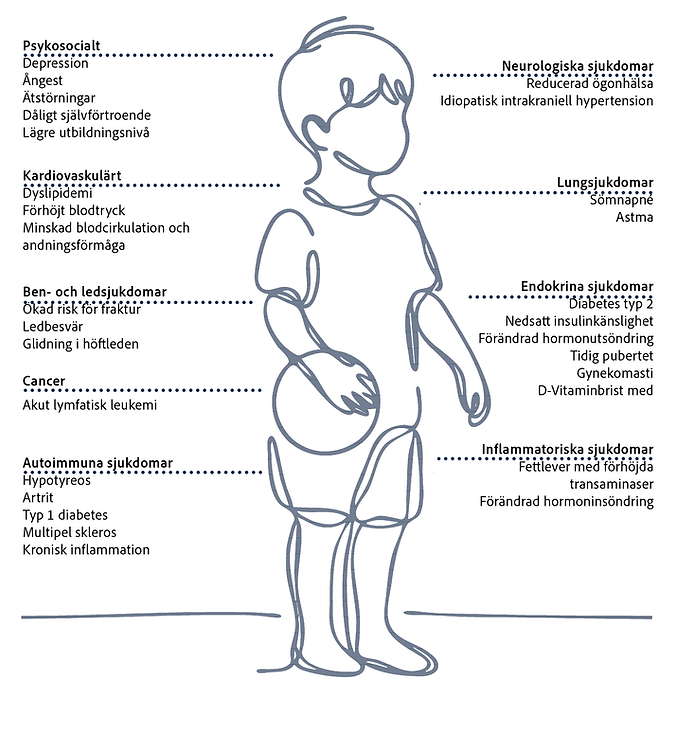
Figure 1. Diseases and conditions caused or exacerbated by obesity during childhood and adolescence. Obesity in children is a chronic disease where almost all organ systems in the body can be affected. (10)
Impaired glucose homeostasis
Children with obesity develop insulin resistance even before school age. Precursors to type 2 diabetes are common among children with obesity in Sweden, significantly more common than in other countries such as Germany (11). Type 2 diabetes is also increasingly prevalent, but many are not affected until young adulthood. In Sweden, the risk of developing type 2 diabetes as a young adult is more than 20 times greater if one suffers from obesity as a child (12). Type 2 diabetes affecting young people is a serious disease with a poor prognosis. It is a significantly more dangerous disease to develop as a young adult than in middle age. Compared to type 1 diabetes, type 2 diabetes has an alarmingly high mortality rate and rapid progression of secondary complications such as kidney and eye complications (13,14). This also applies in Sweden and is not due to social factors. Children with type 2 diabetes have better glucose control than children with type 1 diabetes, but despite this, a faster development of complications (15).
Blood lipids, vascular impact, and blood pressure
Childhood obesity is linked to an elevated risk of developing vascular impairment. Several factors influence this, including that obesity leads to increased inflammation and elevated levels of LDL cholesterol and triglycerides. Children with obesity therefore have increased intima-media thickness in the carotid arteries and also disturbed vascular functionality (16). Children with obesity have an increased risk of hypertension (17). This is also common in Sweden (18), which is documented in the national quality register BORIS. High blood pressure also occurs in the age group 5-10 years. Children and adolescents with obesity relatively often have disturbed diurnal variation in their blood pressure (19,20), which is considered to predispose them to myocardial impact. Childhood obesity leads to an increased risk of heart attack as an adult (21).
Fatty liver, asthma, and joint problems
Fatty liver is relatively common among children with obesity, and this is associated with a later risk of liver fibrosis (22). Obesity leads to reduced lung volume, but obesity also leads to an increased risk of asthma among children (23), likely linked to increased general inflammatory activity.
Cognitive impairments
Childhood obesity leads to a greatly increased risk of school problems (24). To what extent this is due to discriminatory behaviour from the environment and how much it is due to a direct effect of obesity on cognition is unclear, but it is independent of socioeconomic status. Children with obesity have morphological changes in the central nervous system (25). Animal studies show that obesity and overconsumption of fatty foods lead to cognitive impairments (26). Weight reduction in adults leads to improved memory (27,28) and improved glucose regulation. Improved glucose regulation among type 2 diabetics quickly leads to improved cognitive functions (29). These studies indicate that the link between cognition and obesity is causal and reversible, i.e. that obesity leads to cognitive impairments and that treatment reduces the problems that arise.
Treatment of childhood obesity
Effect of treatment on weight development
Childhood obesity is mainly treated with behavioural support that aims to lead to lifestyle changes, which in turn should lead to weight loss. The more frequent the support offered, the better the results that can be achieved (6,30). The annual report for the national quality register for childhood obesity treatment, BORIS, describes the results achieved in Sweden. There are several scientific articles that also support the effectiveness of treatment. Treatment should be initiated early; younger children show significantly better effects than older children, and the effect is also better if treatment begins before the degree of obesity becomes too pronounced (31,32,33). For adolescents, obesity surgery is also used with relatively good results (34). The effect of the obesity and diabetes medication liraglutide has also recently been evaluated for adolescents with relatively good results (35). Applications for approval for the treatment of adolescent obesity have been submitted in both the USA and the EU.
Effect of treatment on school performance
There is a direct link between weight development and school performance that is not related to socioeconomic status. Children who reduce their degree of obesity perform significantly better in school. 46% of children with obesity who do not lose weight do not complete upper secondary school with passing grades, but this figure drops to 33% for those who are effectively treated and reduce their weight by 0.25 BMI SDS units (24).
Effect of treatment on future morbidity
Significant weight loss drastically reduces almost all risk markers for future morbidity (34). Those who had obesity as children but enter adulthood without obesity have the same risk for future cardiovascular disease as those who did not have obesity as children. Metabolic syndrome during adolescence that disappears before adulthood leads to normalised blood vessels and a normalised risk of type 2 diabetes (36). Even moderate weight loss leads to a reduced risk of early onset of type 2 diabetes (12). A relatively substantial weight loss is required to normalise blood pressure, which is not often achieved with conventional lifestyle treatment (18).
Behavioural support conventional childhood obesity treatment is time-consuming and costly
As mentioned above, childhood obesity treatment is time-consuming. If it is not allowed to be so, its effectiveness decreases, which it has done in Sweden in recent years (37), and then care tends to become meaningless for those who need it most. The United States Preventive Services Task Force has estimated in a major literature review that families need 26 hours of contact with healthcare for a treatment to lead to a clinically significant reduction in obesity with reasonable certainty (30). Such a treatment is not always feasible. Many families cannot be absent from work for so much time, and travel time to the treating unit can also make it impossible to carry out such intensive treatment. Furthermore, healthcare does not always have the resources to allocate to the required extent, even though the long-term socio-economic gain of effective childhood obesity treatment is indisputable, and despite the great suffering that obesity causes for many children and young people. It is likely that a lack of resources has led to a deterioration in treatment results in Sweden in recent years (37). New innovative treatment support is under development which, together with medication and surgery, will create opportunities to help more children with obesity achieve a healthier life. Read more about how Evira enables more frequent contact with fewer healthcare resources.
Societal cost
The increased cost for a child with obesity, compared to someone with a healthy weight, has been calculated in Sweden at SEK 780,000 per individual up to the age of 65 (38,39). This means that there is a long-term economic gain for society if treatment is initiated early, even if only a small proportion of children were to achieve a good effect from the treatment. The cognitive and psychosocial effects of obesity on societal costs are also significant. Half of the young people who do not complete upper secondary school with approved grades end up in social exclusion, and the cost of social exclusion is approximately SEK 20 million per individual (40). Based on the improved school results (see above), the societal benefit can be calculated at SEK 1.4 million per effectively treated child with obesity in reduced costs for social exclusion.
Further information on childhood obesity
References
- 1. Nyberg, G., et al., Differences in metabolic risk factors between normal weight and overweight children. Int J Pediatr Obes, 2011. 6(3-4): p. 244-52.
- 2. Bygdell, M., et al., The rise and the recent decline of childhood obesity in Swedish boys: The BEST cohort. Int J Obes (Lond), 2017.
- 3. Marcus, C., et al., A 4-year, cluster-randomized, controlled childhood obesity prevention study: STOPP. Int J Obes (Lond), 2009. 33(4): p. 408-17
- 4. Mossberg, H.O., 40-year follow-up of overweight children. Lancet, 1989. 2(8661): p. 491-3.
- 5. Park, M.H., et al., The impact of childhood obesity on morbidity and mortality in adulthood: a systematic review. Obes Rev, 2012. 13(11): p. 985-1000.7.
- 6. Mead, E., et al., Diet, physical activity and behavioural interventions for the treatment of overweight or obese children from the age of 6 to 11 years. Cochrane Database Syst Rev, 2017. 6: p. CD012651.
- 7. Fontaine, K.R., et al., Years of life lost due to obesity. JAMA, 2003. 289(2): p. 187-93
- 8. Lindberg, L., et al., Association of childhood obesity with risk of early all-cause and cause-specific mortality: A Swedish prospective cohort study. PLoS Med, 2020. 17(3): p. e1003078.
- 9. Morinder, G., et al., Insulin sensitivity, VO2max and body composition in severely obese Swedish children and adolescents. Acta Paediatr, 2009. 98(1): p. 132-8.
- 10. Marcus, C et al., Pediatric obesity—Long-term consequences and effect of weight loss. JIM, 2022. 292(86): p. 870-891.
- 11. Hagman, E., et al., Impaired fasting glucose prevalence in two nationwide cohorts of obese children and adolescents. Int J Obes (Lond), 2014 38(1): p. 40-5.
- 12. Hagman, E., et al., Association between impaired fasting glycaemia in pediatric obesity and type 2 diabetes in young adulthood. Nutr Diabetes, 2016. 6(8): p. e227.
- 13. Constantino, M.I., et al., Long-Term Complications and Mortality in Young-Onset Diabetes: Type 2 diabetes is more hazardous and lethal than type 1 diabetes. Diabetes Care, 2013.14.
- 14. Dabelea, D., et al., Association of Type 1 Diabetes vs Type 2 Diabetes Diagnosed During Childhood and Adolescence With Complications During Teenage Years and Young Adulthood. JAMA, 2017. 317(8): p. 825-835.
- 15. Ek, A.E., et al., Microalbuminuria and retinopathy in adolescents and young adults with type 1 and type 2 diabetes. Pediatr Diabetes, 2020.
- 16. Tounian, P., et al., Presence of increased stiffness of the common carotid artery and endothelial dysfunction in severely obese children: a prospective study. Lancet, 2001. 358(9291): p. 1400-4.
- 17. Matossian, D., Pediatric Hypertension. Pediatr Ann, 2018. 47(12): p. e499-e503.
- 18. Hagman, E., et al., The effect of weight loss and weight gain on blood pressure in children and adolescents with obesity. Int J Obes (Lond), 2019. 43(10): p. 1988-1994.
- 19. Westerstahl, M., et al., Nocturnal blood pressure non-dipping is prevalent in severely obese, prepubertal and early pubertal children. Acta Paediatr, 2014. 103(2): p. 225-30.
- 20. Westerstahl, M. and C. Marcus, Association between nocturnal blood pressure dipping and insulin metabolism in obese adolescents. Int J Obes (Lond), 2010. 34(3): p. 472-7.
- 21. Armstrong, K.R., et al., Childhood obesity, arterial stiffness, and prevalence and treatment of hypertension. Curr Treat Options Cardiovasc Med, 2014. 16(11): p. 339.
- 22. Smith, S.K. and E.R. Perito, Nonalcoholic Liver Disease in Children and Adolescents. Clin Liver Dis, 2018. 22(4): p. 723-733.
- 23. Gomez-Llorente, M.A., et al., Obesity and Asthma: A Missing Link. Int J Mol Sci, 2017. 18(7).
- 24. Hagman, E., et al., Childhood Obesity, Obesity Treatment Outcome, and Achieved Education: A Prospective Cohort Study. J Adolesc Health, 2017. 61(4): p. 508-513.
- 25. de Groot, C.J., et al., Brain structure, executive function and appetitive traits in adolescent obesity. Pediatr Obes, 2017. 12(4): p. e33-e36.
- 26. Nguyen, J.C., A.S. Killcross, and T.A. Jenkins, Obesity and cognitive decline: role of inflammation and vascular changes. Front Neurosci, 2014. 8: p. 375.
- 27. Biessels, G.J. and L.P. Reagan, Hippocampal insulin resistance and cognitive dysfunction. Nat Rev Neurosci, 2015. 16(11): p. 660-71.
- 28. Alosco, M.L., et al., Improved memory function two years after bariatric surgery. Obesity (Silver Spring), 2014. 22(1): p. 32-8.
- 29. Cooray, G., et al., Effects of intensified metabolic control on CNS function in type 2 diabetes. Psychoneuroendocrinology, 2011. 36(1): p. 77-86.
- 30. O'Connor, E.A., et al., Screening for Obesity and Intervention for Weight Management in Children and Adolescents: Evidence Report and Systematic Review for the US Preventive Services Task Force. JAMA, 2017. 317(23): p. 2427-2444.
- 31. Danielsson, P., et al., Five-year outpatient programme that provided children with continuous behavioural obesity treatment enjoyed high success rate. Acta Paediatr, 2016.
- 32. Danielsson, P., et al., Response of severely obese children and adolescents to behavioral treatment. Arch Pediatr Adolesc Med, 2012. 166(12): p. 1103-8.
- 33. Danielsson, P., et al., Importance of age for 3-year continuous behavioral obesity treatment success and dropout rate. Obes Facts, 2012. 5(1): p. 34-44.
- 34. Olbers, T., et al., Laparoscopic Roux-en-Y gastric bypass in adolescents with severe obesity (AMOS): a prospective, 5-year, Swedish nationwide study. Lancet Diabetes Endocrinol, 2017.
- 35. Kelly, A.S., et al., A Randomized, Controlled Trial of Liraglutide for Adolescents with Obesity. N Engl J Med, 2020. 382(22): p. 2117-2128.
- 36. Magnussen, C.G., et al., A diagnosis of the metabolic syndrome in youth that resolves by adult life is associated with a normalization of high carotid intima-media thickness and type 2 diabetes mellitus risk: the Bogalusa heart and cardiovascular risk in young Finns studies. J Am Coll Cardiol, 2012. 60(17): p. 1631-9.
- 37. Neovius, K., et al., Lifetime productivity losses associated with obesity status in early adulthood: a population-based study of Swedish men. Appl Health Econ Health Policy, 2012. 10(5): p. 309-17.
- 38. Odegaard, K., et al., The Swedish cost burden of overweight and obesity--evaluated with the PAR approach and a statistical modelling approach. Int J Pediatr Obes, 2008. 3 Suppl 1: p. 51-7.
- 39. Hagman, E., et al., Paediatric obesity treatment during 14 years in Sweden: Lessons from the Swedish Childhood Obesity Treatment Register-BORIS. Pediatr Obes, 2020: p. e12626.
- 40. Ingvar Nilsson & Anders Wadeskog; Utanförskapets Ekonomiska Sociotoper, WHO nätverk Healthy Cities 2012.