
A child being treated for obesity spends very little of their time with their healthcare team.
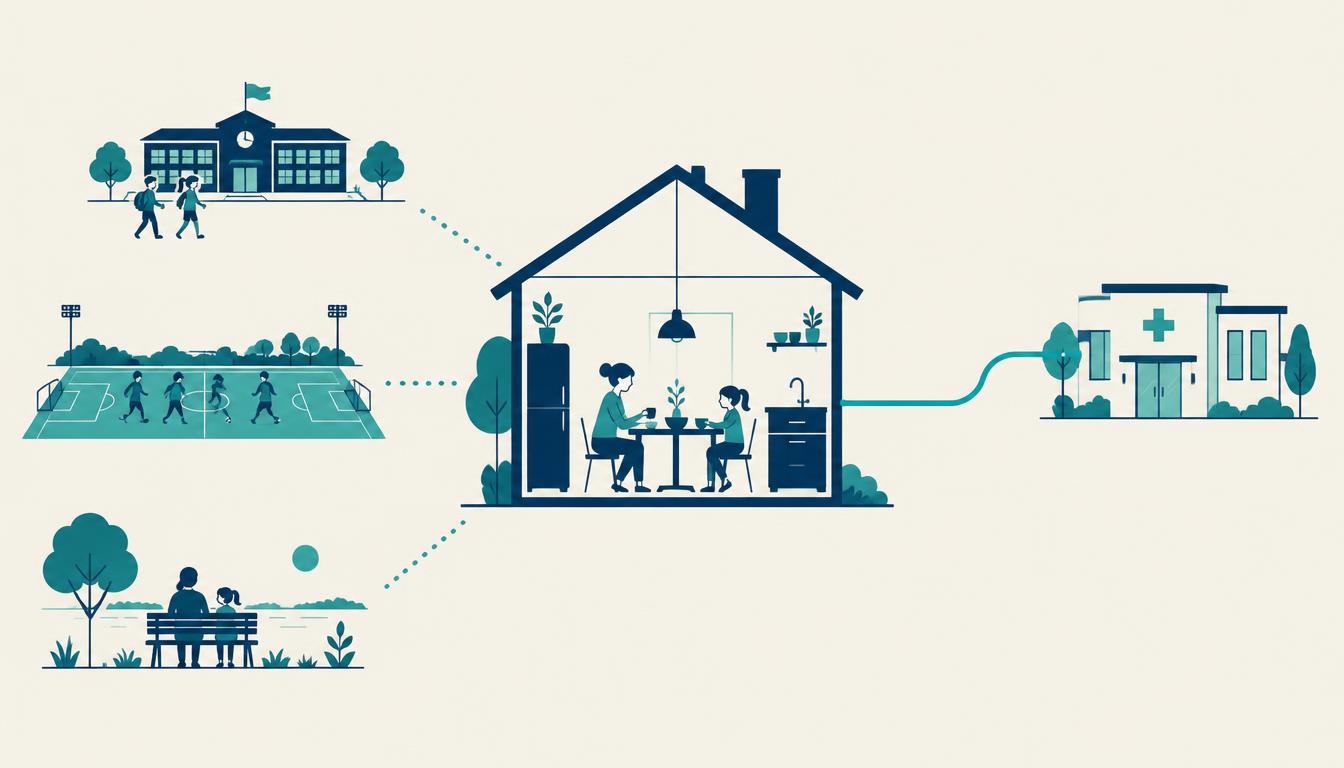
Treatment is happening elsewhere. At home at the breakfast table. At school. At football practice. During weekends and holidays. Week after week, between visits to the clinic.
This is one of the challenges in treating long-term illnesses: most of it happens when healthcare isn't there.
Therefore, if healthcare is to come closer to the patient, it is not enough to make the healthcare appointment digital. We also need to create a functioning link between what happens at home and treatment in healthcare.
When measurement moves
In a preliminary study on diagnostics within Close-to-home care, Medicinsk Diagnostik Karolinska describes how healthcare is shifting from the hospital towards primary care and the patient's home. Diagnostics and monitoring are highlighted as important enablers of this development.
But placing a connected scale, blood pressure monitor, or other medical device in the patient's home is the easy part.
The more difficult question is:
How do we make measurement a functional part of healthcare?
Quality then involves significantly more than sensor precision. It's about the entire chain: what equipment is used, how the measurement is performed, how errors are detected, how the information is transferred, and how it is used in treatment.
And here there is still a gap. Region Stockholm has established structures for quality assurance of near-patient analyses within healthcare, but the preliminary study concludes that there is a lack of a corresponding overarching structure for self-monitoring.
The problem is therefore not getting more connected products into people's homes. The problem is making them a cohesive part of healthcare.
Within obesity, this becomes particularly clear
Obesity is treated over a long period. Months can pass between times the healthcare team meets the family, while treatment continues every day.
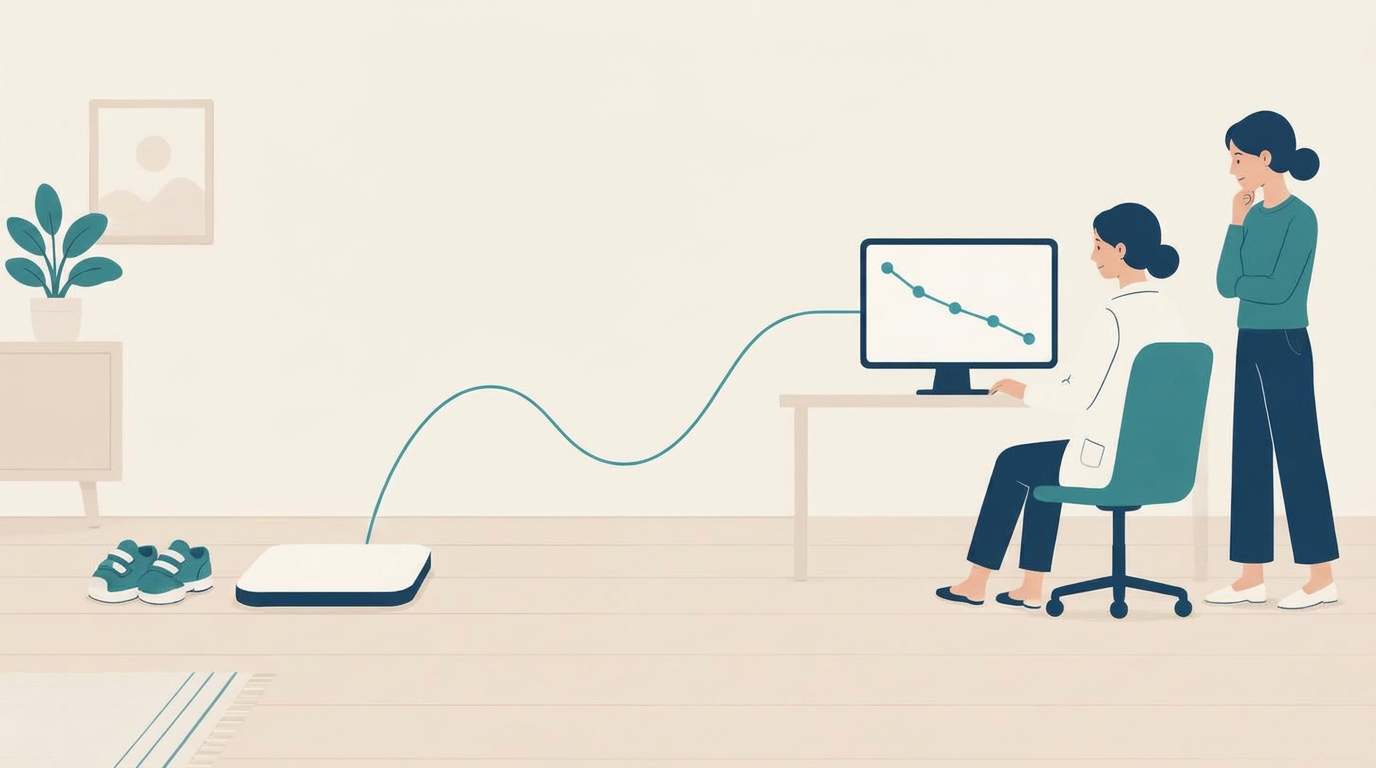
If the healthcare provider's view of progress is primarily formed during clinic visits, feedback becomes sparse. A downward trend can be detected late. A family on the right track may have to wait a long time for confirmation.
Self-monitoring creates the opportunity for a shorter feedback loop.
At Evira, the family uses a connected scale at home. The weight is not shown in kilograms to the child. Instead, the measurements are used to track progress over time and provide the family and healthcare team with a continuous picture of how the treatment is progressing.
The point is not to measure more. The point is to reduce the distance between what happens at home and the healthcare provider's ability to act.
Patients should receive more support – not more administration
When more of the care takes place at home, the patient and family also take on a greater role.
This can create involvement and independence. But self-monitoring must not mean that the healthcare provider's work is simply shifted onto the patient.
Technology must make it easy to do things correctly and work for people with varying digital literacy, languages, and circumstances. Otherwise, digitalisation risks creating new barriers to healthcare.
Data must find its way back to healthcare
Collecting information at home is only half the battle.
It must also become usable.
The vision for decentralised diagnostics described in the preliminary study is that results from, among other things, self-monitoring should be able to be transferred to the healthcare system and presented in a way that works for the recipient.
This is an important principle even broader than diagnostics.
Digital healthcare should not become parallel care.
The future of ‘Nära vård’ cannot consist of ever more standalone apps, portals, and connected products, each creating its own information island. The information needs to be able to follow the patient and be available where the healthcare provider works.
From calendar-driven to more needs-driven care
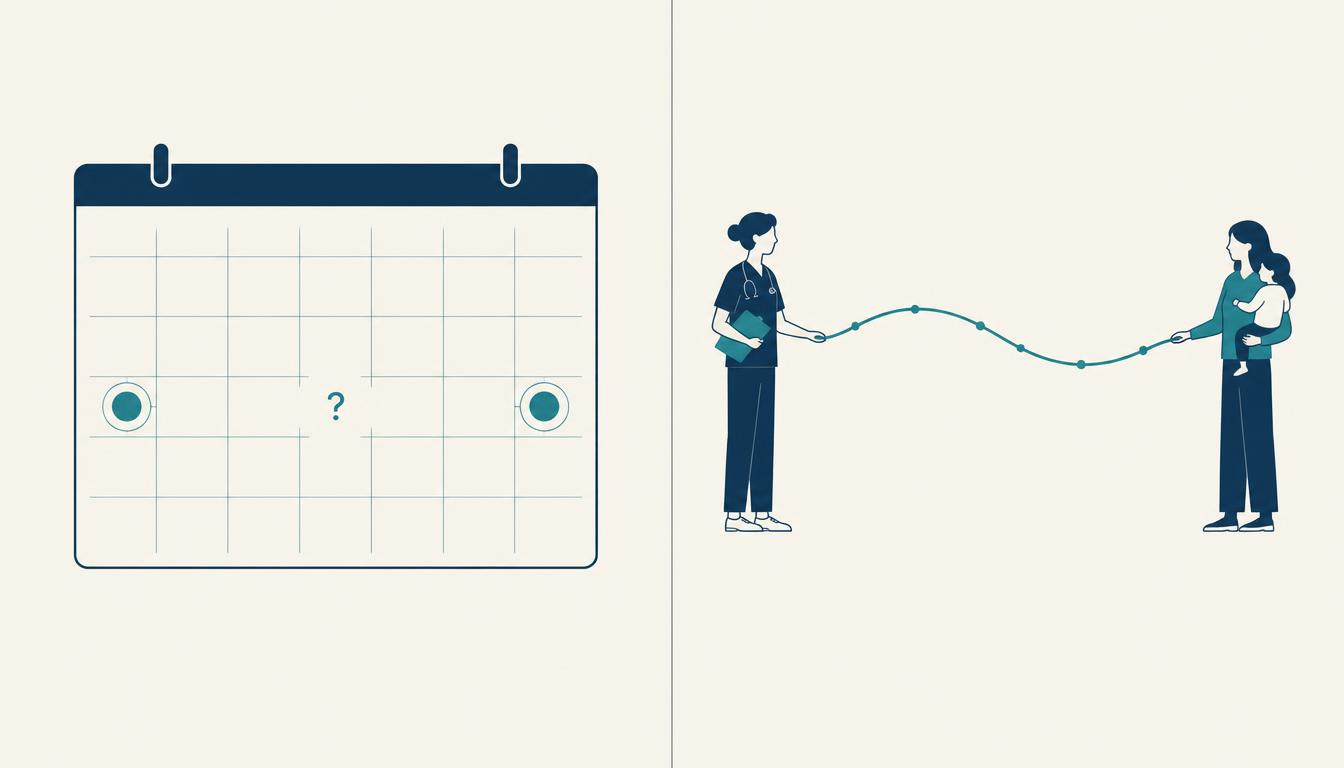
When healthcare primarily receives new information at the next follow-up, it is the calendar that determines when the patient's progress becomes visible.
With continuous information, the healthcare team can have better conditions to see who is following their treatment plan and who needs more support.
This does not mean that technology replaces healthcare professionals.
On the contrary, technology can help healthcare professionals to use their time where it makes the biggest difference.
Truly local
Moving healthcare closer to the patient is therefore about more than video consultations and connected products.
- The measurements must be trustworthy.
- It must be simple for the patient.
- The information must find its way back to healthcare.
- And healthcare professionals must be able to use it.
This is the type of infrastructure we at Evira are building for obesity treatment.
Because when treatment takes place at home, healthcare also needs to function there.
Sources and further reading
Medicinsk Diagnostik Karolinska, "Quality assurance of diagnostics in Nära vård, Region Stockholm – Preliminary study on the design of quality assurance support for diagnostics within Region Stockholm's implementation plan for Nära vård 2023", 2024-01-08.
Region Stockholm, Vårdgivarguiden, “Close-to-home care in Region Stockholm”, linked to the region’s objective and strategic plan 2040. vardgivarguiden.se
The sources are used here as an external description of the developments in close-to-home care: decentralised diagnostics, self-monitoring, quality assurance, information transfer, person-centred approach and support for self-care. They are not evaluations of Evira, and neither Region Stockholm nor Karolinska recommends or supports Evira. The arguments regarding obesity treatment and the conclusions otherwise are Evira's own.
Read more about the research behind Evira and our references and sources.