
Guide for healthcare providers
What a paediatric clinic can achieve with Evira
With Evira, you can monitor a child’s progress between clinic visits and support the family while changes are put into practice at home. The family gains a clear view of the treatment goal and a direct communication channel to their team. For the clinic, it provides continuous data to assess progress and target contact to patients who need support.
Reviewed by Evira's medical team
Published · Updated
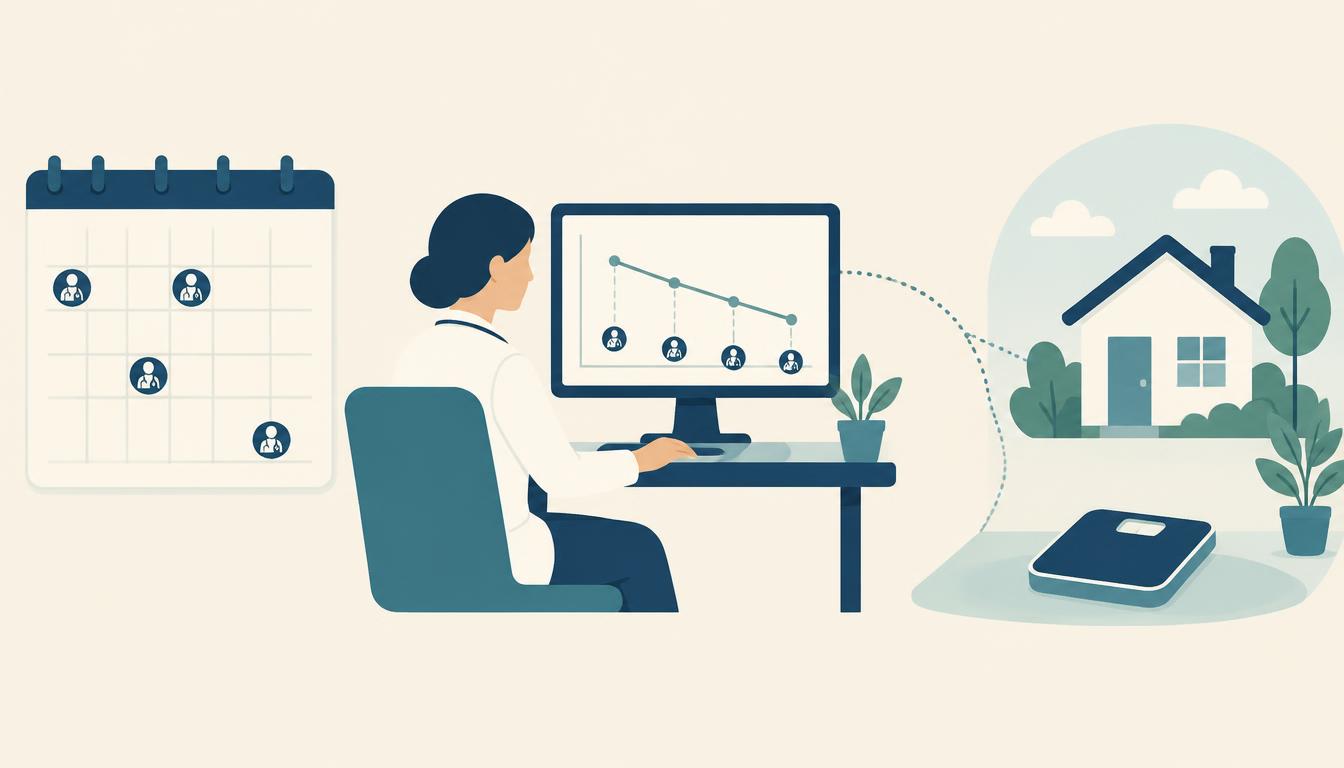
Support while changes are put into practice at home
During a consultation, you and the family can agree on a change that feels achievable. It is then at home, at school, and at weekends that it must work. With Evira, the family can track progress during that time and receive feedback on their efforts.
The child weighs themselves on a numberless scale. Measurements are transferred automatically, and the app displays progress in relation to the goal set together with the clinic. The family receives data to understand how they are doing and raise questions with the clinician. Conversations can focus on what is working, what has proved difficult, and what the family would like to try next. How Evira works in treatment.
This feedback loop is central to Evira's clinical approach. The family contributes knowledge of their everyday life, and the healthcare team provides support and clinical guidance. When both can follow progress, it is easier to have a constructive discussion about the next step.
Better treatment outcomes, sustained at three years
Evira’s combination of digital support and clinical treatment has been evaluated over several years. In a published three-year follow-up, 107 children and adolescents receiving Evira-supported treatment were compared with 321 matched patients receiving standard care.
At three years, the adjusted mean change in BMI z-score was −0.29 in the Evira group and −0.12 in the comparison group. The reduction in this metric was therefore more than double. At follow-up, 31.8 per cent of the Evira group had achieved remission, defined as falling below the threshold for obesity, compared with 18.7 per cent in standard care.
These results are from a comparison with registry controls, without randomised treatment allocation. They reflect the combined treatment model of Evira and the clinical team's interventions. Read the three-year follow-up in the International Journal of Obesity.
For a clinic looking to strengthen its childhood obesity service, the study provides concrete evidence: superior outcomes with the evaluated model, sustained over a timeframe relevant to long-term treatment.
Target clinicians' time where contact is needed
Evira makes progress visible even when the family is not at the clinic. In the clinical portal, patients are flagged when measurements diverge from their established trend. Clinicians are alerted to which patients require closer assessment and can initiate contact before the next scheduled visit. Evira for regions and clinics.
Contact can take the form of a brief message acknowledging progress, an inquiry about what has changed at home, or an arrangement for a phone call. This provides more opportunities to support the family without every check-in requiring a booked clinic appointment.
Messages can be handled during dedicated sessions. Clinicians can review progress, discuss a case with a colleague, and respond to the family. This allows digital follow-up to be scheduled efficiently into the working day while maintaining continuity between visits.
Clinical contact can reach families across distances
For families living far from the clinic, an appointment entails travel, time off school, and time off work. When measurements and parts of the follow-up can occur at home, contact can be maintained between these journeys.
In Region Jämtland Härjedalen, Evira is integrated into the childhood obesity team's routine care. The region highlights the ability to deliver substantial parts of treatment remotely and the value of reduced in-person visits for families facing long travel times. This demonstrates how digital follow-up can be used across large geographical catchment areas. Read about the workflow in Region Jämtland Härjedalen.
You receive support to get started and continue
Evira assists with system setup, patient equipment, and training in both the tool and the clinical method. Training focuses on practical workflows: onboarding a patient, setting goals, tracking progress, and communicating with families.
You can start with a smaller patient cohort. Once the first families are underway, we review the workflow together to address questions arising from real-world use. The clinic has a dedicated contact person at Evira and ongoing access to support. Additional training can be provided as new colleagues join or the service expands.
The service is web-based and requires no local software installation. You can retain your electronic health record (EHR) system and use Evira alongside your current clinical practice. How Evira supports implementation.
Assess the value for your clinic
The value to your service should be linked to what you want to improve. This might be closer patient monitoring, earlier identification of support needs, or making treatment more accessible for families with long travel distances. Setting these priorities provides clear benchmarks when you begin using Evira.
During an initial consultation, we review your patient population, current workflows, and how Evira can integrate into your practice. Costs and clinical resource requirements are considered in relation to this treatment delivery model, giving you a clear basis to evaluate what the system provides, how to use it, and what it means for your service.
Frequently asked questions about the benefits of Evira
- What does Evira add to clinic treatment?
Evira provides families with feedback at home and teams with continuous data between visits. This enables clinicians to identify changes, offer support, and adapt contact while treatment is underway.
- Is there evidence of long-term treatment outcomes?
Yes. In the published three-year follow-up, the Evira-supported treatment group achieved a greater mean reduction in BMI z-score and a higher rate of obesity remission than matched registry controls. The outcomes reflect the combination of digital support and clinical treatment. Read the study.
- Does more frequent contact require more in-person visits?
Part of the contact takes place via messaging and remote monitoring of home measurements. In-person appointments remain an integral part of treatment, and the clinical team determines when the child needs to attend the clinic.
- What support does the clinic receive from Evira?
Evira assists with setup, training, and patient onboarding, and reviews the implementation alongside your team. Dedicated support and contact persons remain available once you are operational. Read about implementation and ongoing support.
More guides for healthcare providers
- How to choose treatment tools for childhood obesityStart from what the team and families need to be able to do in treatment, then assess tools, research, and how the work fits into clinic routines.
- Treating childhood obesity across different agesHow support in Evira can adapt to the child's age and maturity – from the role of parents and guardians in younger children to adolescents' own contact with healthcare.