For healthcare providers
How to implement Evira at your clinic
You don't need to manage the implementation yourselves. Evira is implemented together with the clinic and adapted to your existing working methods. We begin by understanding how you treat patients today, who will work with Evira, and where in the patient flow the digital support best fits.
Implementation step-by-step
Review and needs assessment
The family
No impact in this step – the work takes place at the healthcare provider.
The healthcare provider
We review the clinic's patient volume, current treatment approach, and what needs to be resolved.
Agreement and data protection
The family
The family receives information on how data is handled at the start of treatment.
The healthcare provider
An agreement is signed covering costs, data controllership, clinical responsibility and the handling of patient data.
Training of clinicians
The family
No impact in this step.
The healthcare provider
Clinicians receive structured training in the treatment method and the tool before the first patient starts.
Start with a first patient group
The family
The first families get started with the app and scales together with their clinician.
The healthcare provider
The clinic starts on a smaller scale to build routine before broadening the treatment.
Follow-up and scale-up
The family
More families are offered treatment as the clinic scales up.
The healthcare provider
We jointly follow up on results and workflow, and make adjustments before the treatment is expanded to more patients.
Who does what during implementation
The clinic is responsible for
Appoint a treatment team
Determine which healthcare professionals will work with Evira and who will be the local contact person during implementation.
Describe your current working methods
Together, we review the patient flow, how follow-up currently works, and which patients are suitable to start with.
Participate in training
The healthcare professionals who will use Evira participate in the clinical and practical review before the first patients begin.
Responsible for care
The clinic always retains medical responsibility and uses Evira as a support in regular treatment.
Evira is responsible for
Agreement and data protection
We provide contract documentation, personal data processing agreements, and information security documentation, and assist with local reviews.
Clinic setup
We set up the clinic in Evira, create the right conditions for user accounts, and ensure that patient equipment is in place.
Training of healthcare professionals
We go through the treatment model, the evidence, and how Evira is used practically in daily work.
Support at patient start
We are available when the first patients begin and then follow up on the working methods together with the clinic.
Training close to the first patient start
The training can be conducted digitally or on-site. The goal is not just to show how the system works, but for the healthcare professionals to feel confident in how Evira is used in clinical work.
Clinical introduction
We review the treatment model, the evidence behind Evira, and how digital follow-up complements the clinic's existing treatment.
Practical review
Healthcare professionals get to work in the platform and, among other things, go through how to:
- start and follow a patient
- work with treatment goals
- monitor measurements and development
- communicate with the family
- use information from Evira in ongoing follow-up
First patients begin
We recommend that the first patients start soon after the training. This allows clinicians to use the working method immediately while the training is still fresh.
The clinic can start with a smaller number of patients and build up the routine before broadening the treatment.
Follow-up with Evira
Once the clinic is up and running, we follow up together. We capture questions from actual use and adjust the working method where needed.
Once you are up and running, support continues
Implementation does not end when the first patient starts. See how other healthcare providers have implemented Evira in our case studies.
A contact person at Evira
The clinic has a contact person for questions about working methods, implementation, and continued development.
Support in daily work
Clinicians can contact Evira through the support function. For urgent issues, telephone support is also available.
Monitoring of usage
Evira can provide the clinic with data at a clinic level to monitor usage, patient activity, and treatment development.
Additional training as needed
For example, in cases of new staff, changed working methods, or a larger rollout, additional training and reviews can be carried out.
Broadening at your own pace
Once the working method functions for the first patients, more patients and clinicians can be progressively included.
The technical implementation is small
Evira is a web-based service and does not require any local installation on healthcare professionals' computers.
For healthcare professionals, a standard computer with an internet connection and a modern web browser is needed.
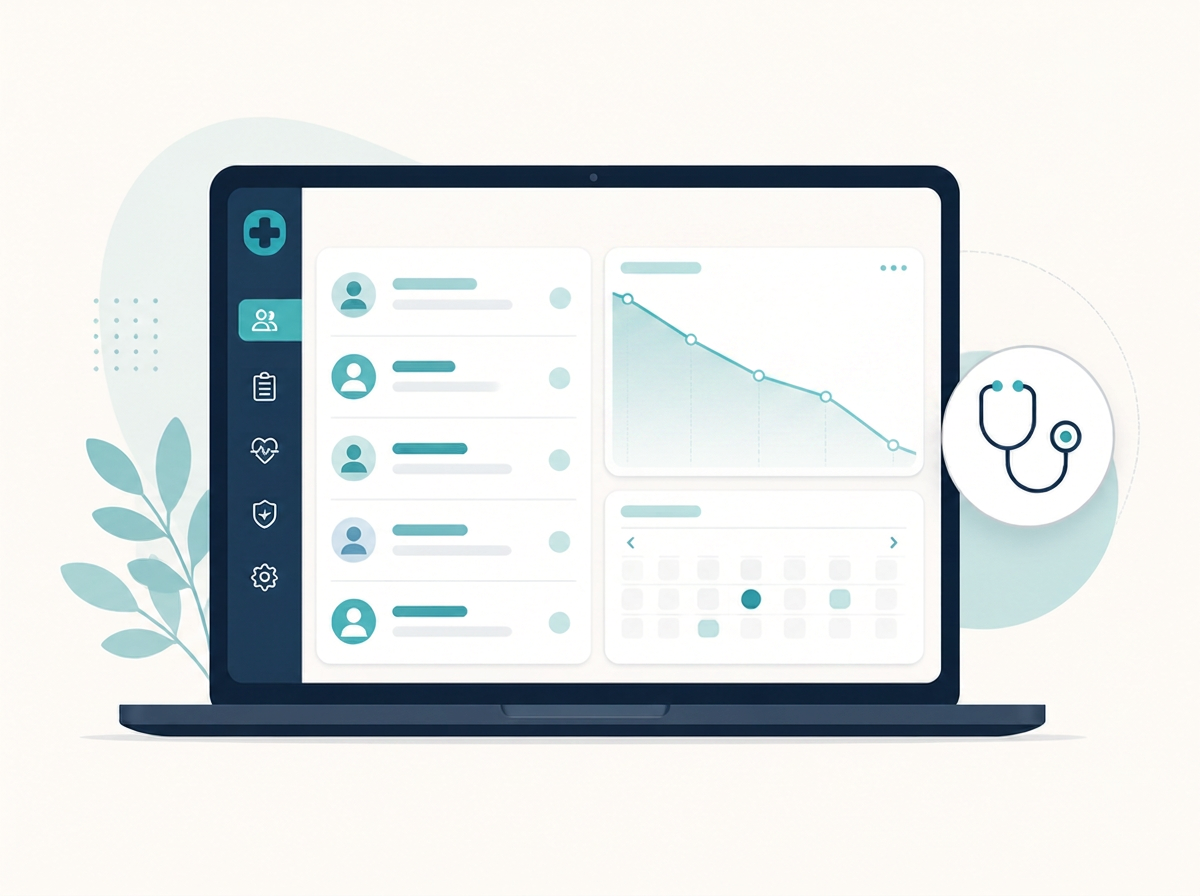
The family uses the Evira app on their phone together with the connected, numberless weighing scale. The phone needs an internet connection and Bluetooth.
Evira helps the clinic with the technical setup, patient equipment, and the documentation needed before starting. Read more about how we handle patient data and security on the page about security and patient data.