
Guide for healthcare providers
How childhood obesity teams work with digital follow-up
Digital follow-up in childhood obesity allows clinical teams to monitor how treatment functions in a family’s day-to-day life. In Evira, home measurements are linked with individualized goals and direct clinic communication. This allows you to identify trends, communicate with families, and evaluate the effect of clinical feedback between in-person appointments.
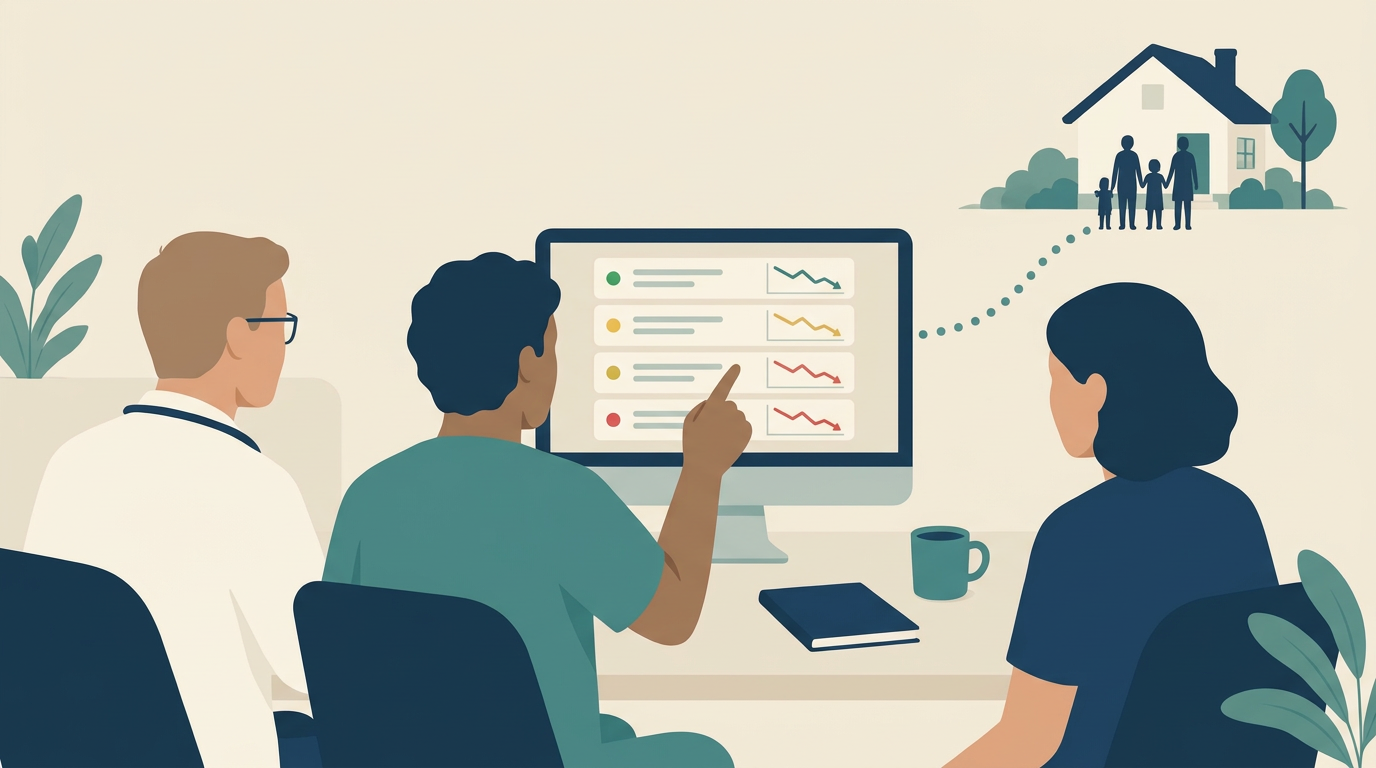
For the team, the workflow begins with a shared clinical overview. Which families need assistance moving forward? Who has submitted a query? And who needs reinforcement that their efforts are producing results? The clinical portal provides the tools to prioritise contacts and maintain continuity of care over time. How Evira works in healthcare.
Reviewed by Evira's medical team
Published · Updated
Ground care in a shared treatment plan
At treatment initiation, review the target range, how progress is displayed, and how the family will receive support. Discuss who will assist the child with weighing and how routines will work if the child lives across multiple homes. This initial review establishes a clear framework to return to during follow-up.
When the family understands their target range and knows how to communicate factors affecting treatment, the progress curve has clinical context. It becomes a shared foundation for discussing what is working and what support is needed.
Use the patient overview to prioritise contact
When working in the clinical portal, start by identifying which patients require attention. The patient overview helps triage your caseload. You can then review the individual patient's trajectory in the context of recent communications and notes provided by the family.
A changing trend may warrant clinical outreach. Missed measurements should also be investigated, though the underlying reason must be explored through dialogue with the family. For example, a routine may have broken down, or the equipment may require technical assistance.
The workflow links three elements: what you observe, what the family reports, and what you agree to do next. Following contact, you can continue monitoring progress to determine whether support needs further adjustment.
Provide feedback when treatment progresses well
Interim contact provides an opportunity to acknowledge positive progress as it occurs. When a family reports that a change has been successfully adopted, you can reinforce their achievement and help them consolidate sustainable daily habits.
Feedback is most effective when personalised to observable data and the family's specific efforts. A brief message is often sufficient to show that the clinical team is actively monitoring progress and available for support.
When progress stalls or reverses, communication should remain constructive, objective, and respectful. Outline what the data shows, explore the family's current circumstances, and help them identify an achievable next step. The family's perspective is essential to understanding why a change proved difficult and what strategies might work moving forward.
Match the mode of contact to family needs
In-app messaging is suitable for brief feedback, quick questions, and checking in on current goals. Families can write when questions arise, and clinicians can review and respond during dedicated follow-up sessions. This also allows time to consult a colleague before replying.
More complex or sensitive discussions may require a telephone consultation or an in-person clinic visit. Clinical judgement and family needs determine the appropriate contact method.
Consider, for example, a family whose established routine has been disrupted by a change in family circumstances. During review, the clinician notes an upward trend and initiates contact. The family explains the situation, and together you agree on a practical, manageable adjustment. The subsequent follow-up checks in on that specific agreement. This illustrates how remote measurement translates into clinical dialogue and tailored support.
Establish follow-up as a shared team responsibility
Allocate dedicated rota time for digital follow-up and define how tasks are distributed. It must be clear who reviews the patient list, how cases are escalated within the multi-disciplinary team, and who covers during planned leave or sickness.
During handovers, covering clinicians must be able to see what the family is currently working on, what feedback has been provided, and what requires follow-up. Use peer review for complex cases and conduct joint team reviews for clinical situations that prove challenging to resolve individually.
When onboarding new staff, hands-on training with test patients allows the team to align on clinical standards: what data is observed, what questions to ask, and how to follow up on responses.
Integrate digital follow-up with clinic visits and medical records
Ahead of an in-person appointment, review the patient’s progress curve and interim messages. The consultation can then focus on what the family has tried, what has improved, and where challenges persist.
Evira provides clinical summaries at key points during treatment. These can be reviewed by the clinician and copied into the electronic health record. Establish local protocols detailing when documentation occurs and how clinical assessments and treatment plans are recorded.
When adjusting a target range, ensure the family understands the rationale behind the change. Tie it to the overarching treatment plan and agreed goals, ensuring the next phase begins with shared expectations.
Frequently asked questions about team digital follow-up
- How does software support a childhood obesity team?
Evira consolidates longitudinal progress data and patient communication within a clinical portal. This provides teams with the objective data needed to prioritise follow-ups, tailor support, and assess the impact of clinical advice over time.
- Does the clinician need to be available at the same time as the family?
No, messaging is asynchronous. Families and clinicians can write at different times. The clinic must establish clear response-time protocols and communicate these expectations clearly to families.
- How does the team manage when a colleague is absent?
Plan cover arrangements in advance, ensuring covering staff have the appropriate system access and are familiar with team workflows. Standardised protocols for goal-setting, communication, and documentation facilitate smooth handovers.
- How does a clinic implement this workflow?
Evira supports clinics with clinical and technical training, patient onboarding, and post-launch reviews. During implementation, we align the digital tool with your local clinical pathways. Read about implementation.
See how the workflow operates in practice
During a walkthrough of Evira, you can follow an end-to-end clinical case: from the patient overview to clinical assessment, messaging, and EHR documentation. We tailor the session to your team's current workflows and outline the steps required to get started.
More guides for healthcare providers
- Evira in the clinicEvira's clinical portal: an overview of patient progress, contact with families between visits, and a shared way of working for the team.
- Digital childhood obesity treatment across multiple clinicsJoint training, a clear division of responsibility during leave, induction for new colleagues, and scheduled time for follow-up at each clinic.